
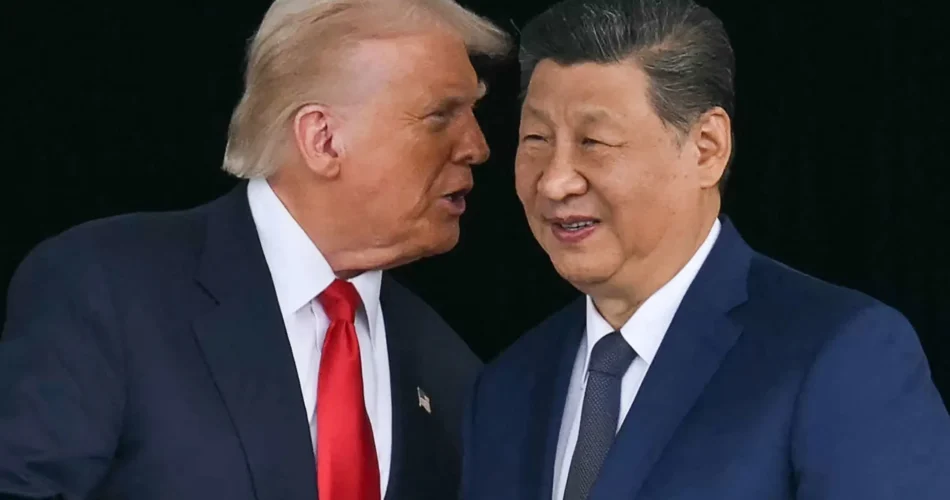
In a move sending ripples across world markets, China has officially confirmed that President Donald Trump will make a state visit to Beijing this week for crucial talks with President Xi Jinping.
The announcement has markets on edge and diplomats scrambling as the leaders of the world’s two biggest economies sit down amid soaring tensions.
According to China’s Foreign Ministry, Trump will arrive on May 13 and stay through May 15 at Xi’s invitation. The visit had been anticipated for weeks, with U.S. officials already dropping hints, but Beijing’s formal confirmation adds fresh weight to the moment.
This won’t be just another diplomatic handshake. With global oil prices spiking due to the Iran conflict and the Strait of Hormuz blockade, the stakes feel unusually high. Both sides are looking to ease trade frictions, tech restrictions, and security rivalries that have strained relations for years.
A timely meeting amid crisis
Treasury Secretary Scott Bessent has been laying the groundwork in recent days, heading preliminary talks and confirming his own trip to Beijing for the Trump-Xi summit. The two presidents last met in person in late 2025 in South Korea, where they tried to dial down commercial tensions. Now, they’re picking up those threads in China’s capital.
For everyday Americans, this summit could mean real differences in the prices they pay at the pump and for everyday goods. A breakthrough on trade could stabilize supply chains still recovering from past disruptions. A breakdown, on the other hand, risks pushing inflation higher at a delicate time.
Observers note that the shadow of the Iran war looms large. The ongoing conflict and disrupted oil flows have created what some are calling a historic energy crisis. China, with its deep ties in the region, may hold some leverage as Washington seeks ways to ease pressure on global energy markets.
What to watch for
Expect plenty of pageantry – red carpets, formal dinners, and carefully worded statements. But behind closed doors, the real work will focus on practical deals.
Key topics likely include tariffs, export controls on advanced technology, and broader national security concerns. Both leaders have strong personal rapport from past encounters, which could help bridge gaps where formal negotiations stall.
Trump has long prided himself on striking big agreements with China. Xi, for his part, has emphasized stability and mutual respect. Their chemistry, combined with urgent global pressures, might produce unexpected progress.
Yet challenges remain. Deep distrust on issues like Taiwan, intellectual property, and military activities in the Pacific won’t vanish overnight. Analysts say even small steps forward could calm jittery investors.
Why this matters to you
For families watching grocery bills and gas prices, the outcome carries personal weight. Businesses big and small – from farmers to tech giants – have billions riding on smoother U.S.-China ties.
The visit comes at a moment when many people feel exhausted by constant international drama. A productive summit could offer a rare bit of hopeful news: proof that even fierce rivals can find common ground when the world’s economy hangs in the balance.
As Air Force One prepares to head toward Beijing, all eyes are on what Trump and Xi can achieve in these three days. Will they deliver concrete agreements that ease global anxieties? Or will differences prove too deep?
One thing is certain – the world will be watching closely. This isn’t just diplomacy. It’s a high-wire act with consequences that could touch every corner of daily life, from Wall Street to your local gas station.
Stay tuned as this fast-moving story develops. In an uncertain world, moments like this remind us how connected we all truly are – and how much can change in a single week of talks.