
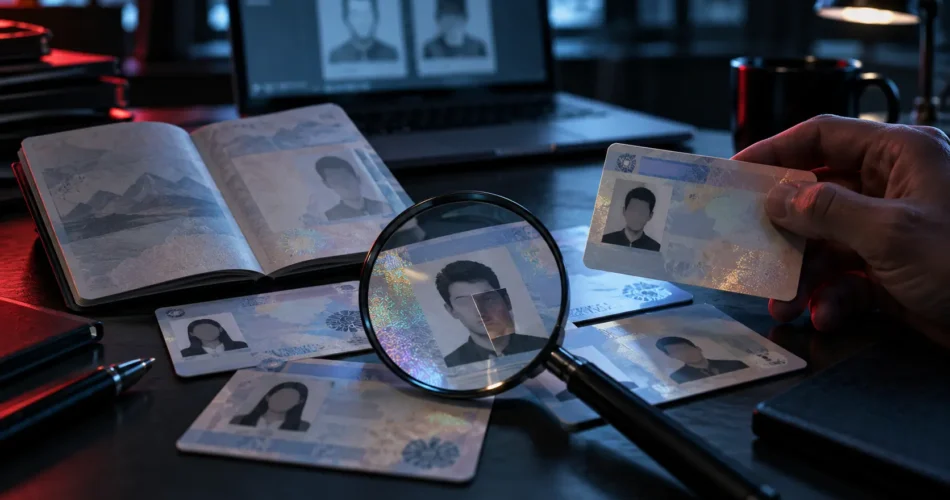
A Montreal man is facing a long list of federal charges after a Canada Border Services Agency investigation uncovered what looks like a full-on setup for making fake identity documents, complete with a loaded firearm found during the search. His name is Ahmad Jawid Toukhi, and he’s 40.
Toukhi appeared in court at the Saint-Jérôme courthouse on September 9, 2026, to face the charges.
How the Investigation Started
The whole thing kicked off back in March 2024, when a CBSA officer at Mirabel International Airport seized 250 blank cards that looked like Canadian permanent resident cards, along with 250 holograms similar to the ones applied to real PR cards. That’s not something you’d have lying around for an innocent reason, so it clearly raised red flags right away.
The investigation picked up steam from there. On July 11, 2024, the CBSA’s Criminal Investigations Section executed a search warrant at a residence on Montreal’s North Shore. Inside, they found a number of forged identity documents containing false biographical information, plus materials used to actually fabricate counterfeit documents.
They also found something that had nothing to do with fake IDs directly, a restricted firearm, specifically a 9×19 mm model 48 semi-automatic Glock, along with three magazines.
The Full List of Charges
Toukhi is facing six separate charges, and together they paint a picture of someone allegedly running a fairly organized operation:
- Smuggling into Canada goods whose importation is prohibited, specifically items meant for producing counterfeit identification documents
- Making false or misleading statements by importing goods into Canada under a false identity
- Possessing identity information with the intent to use it to create false documents
- Making false identification documents, including a fraudulent Canadian passport and false permanent resident cards
- Knowingly importing, selling, offering for sale, or making available counterfeit identification documents
- Defrauding the Government of Canada by smuggling goods intended for producing and issuing fraudulent identification documents
That’s a pretty comprehensive set of charges, covering everything from the import side of getting the materials into Canada to the actual production and distribution of fake documents.
A Multi-Agency Effort
This case wasn’t handled by one team working alone. The seizures and charges came out of collaboration between CBSA officers at Mirabel International Airport, the CBSA Quebec Region Intelligence Section, the CBSA Analytical and Forensic Services Division, and the RCMP’s Cryptocurrency Tactical Operational Support team. The involvement of a cryptocurrency-focused unit suggests investigators were also looking into how any of this might have been financed or paid for.
Why This Matters
Federal officials didn’t downplay the seriousness of what forged identity documents can enable. Minister of Public Safety Gary Anandasangaree said forged documents are often used to facilitate identity theft, fraud, organized crime, and immigration-related offences, and that the CBSA is working to hold people accountable for that kind of activity.
Eric Lapierre, the CBSA’s Regional Director General for the Quebec Region, added that combatting fraud and identity theft is a priority for the agency, and that this particular investigation helps strengthen protections for Canadians against these kinds of crimes.
Part of a Broader Pattern
This isn’t an isolated case for the CBSA either. Back in December 2024, a separate CBSA investigation into imported false documents ended in a prison sentence. Then in May 2025, another investigation led to charges tied to equipment used for making fake identities. Cases like Toukhi’s line up with a bigger federal push, including Canada’s Border Plan, which involves a $1.3 billion investment aimed at strengthening border security and the immigration system.
Where the Case Stands
Right now, none of the charges against Toukhi have been proven in court, and he’s presumed innocent unless the Crown proves otherwise. The case will continue moving through the Quebec court system from here.
Anyone with information about suspicious cross-border activity is encouraged to contact the CBSA Border Watch Line toll-free at 1-888-502-9060, or submit a tip online through the agency’s website.