
Imagine hopping into a car, saying your destination out loud, and just relaxing while it handles everything. No steering, no stress. For many in China, this future is already pulling up to the curb – and it might be coming to a road near you sooner than you think.
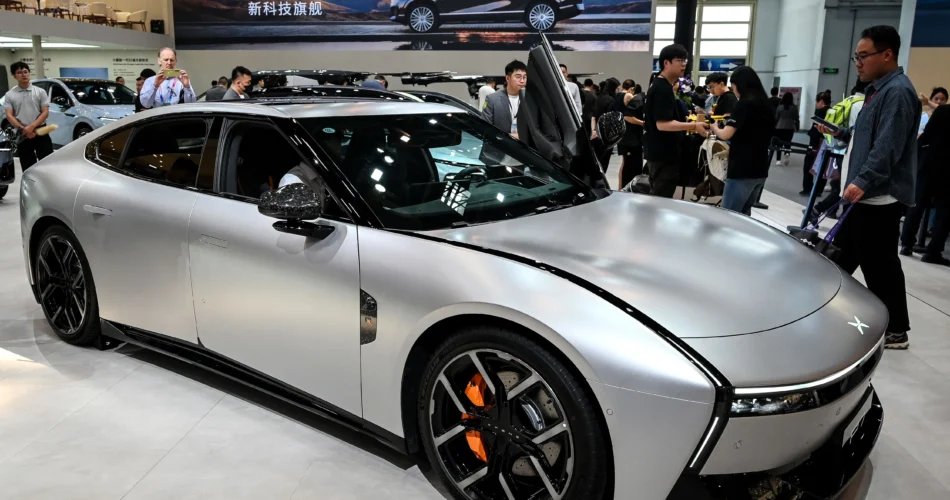
At the massive Beijing Auto Show, Chinese carmakers stole the spotlight with jaw-dropping demos of their latest self-driving tech. While the world watches, these companies are racing full speed toward a driverless revolution that could reshape how we all get around.
Simone McCarthy highlights how manufacturers are wowing crowds with advanced assisted driving systems that feel closer to full autonomy than ever. Visitors saw cars park themselves with simple voice commands, navigate busy streets smoothly, and even handle complex maneuvers without a driver touching the wheel.
Why China is surging ahead
China has poured billions into electric vehicles and smart technology, and it’s paying off. The country already leads in EV sales, and now it’s betting big on autonomy as the next big leap. At the show, brands showcased everything from robotaxis to personal cars packed with AI that learns and adapts in real time.
What makes this exciting – and a bit unsettling for some – is the speed. While regulators in the U.S. and Europe move cautiously, China is testing self-driving tech on public roads at scale. Companies are gathering massive amounts of real-world data that helps their systems improve faster than competitors.
Think about it: fewer accidents caused by human error, less traffic congestion, and more freedom for people who can’t drive. For families, commuters, and even delivery services, the potential benefits are huge. But questions remain about safety, jobs, and what happens when things go wrong.
The global race heats up
Chinese firms aren’t keeping this tech to themselves. They’re eyeing exports and partnerships that could bring affordable autonomous vehicles to markets worldwide. Some analysts believe that by 2030, a huge chunk of new cars in China could be fully driverless, with advanced assistance in most others.
That momentum has other countries taking notice. American and European automakers are investing heavily too, but many experts say China’s combination of government support, vast testing grounds, and hungry tech talent gives it a serious edge right now.
Of course, challenges exist. Safety concerns, regulatory hurdles, and public trust still need addressing. Recent robotaxi tests in Chinese cities have shown both impressive results and occasional hiccups, reminding everyone that the technology is still evolving.
What this means for your daily life
Picture waking up, ordering a self-driving car through an app, and having it drop your kids at school safely while you work from home. Or road trips where you can actually enjoy the scenery instead of gripping the wheel.
For younger generations tired of expensive car payments and insurance, this shift could feel liberating. Affordable Chinese models might make autonomous driving accessible to millions who never dreamed of owning such advanced tech.
Yet it also sparks bigger conversations. How do we prepare for a world with far fewer driving jobs? What rules should govern these smart machines? And can we trust AI with our lives on the highway?
The Beijing Auto Show served as a powerful statement: China isn’t just participating in the future of transportation – it’s trying to lead it. As these sleek, intelligent vehicles roll out, the world is watching closely to see if they’ll truly dominate the roads.
One thing feels certain – the age of the driverless car is no longer science fiction. It’s here, it’s improving rapidly, and it could change everyday life in ways we’re only beginning to imagine. Buckle up (or don’t) – the ride ahead looks thrilling.