
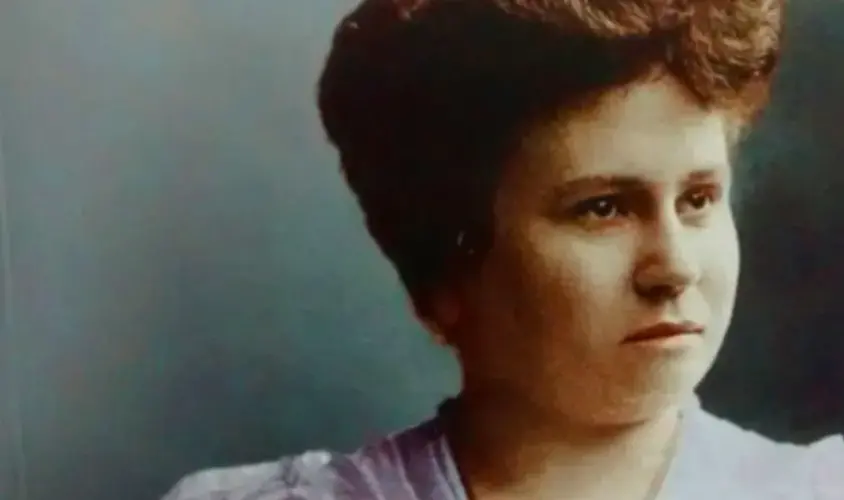
The first woman to vote in Argentina and throughout South America, she was the sixth female student to obtain a medical degree in the country.
Julieta Lanteri, an Italian-Argentine doctor who fought for women’s rights, being the first woman to vote in Argentina and the sixth medical graduate in the country.
Lanteri’s vote in 1911 was also the first ever cast by a woman in South America. The event is “a historic milestone for women who still faced many barriers to political rights” at the time, points out Google Discovery.
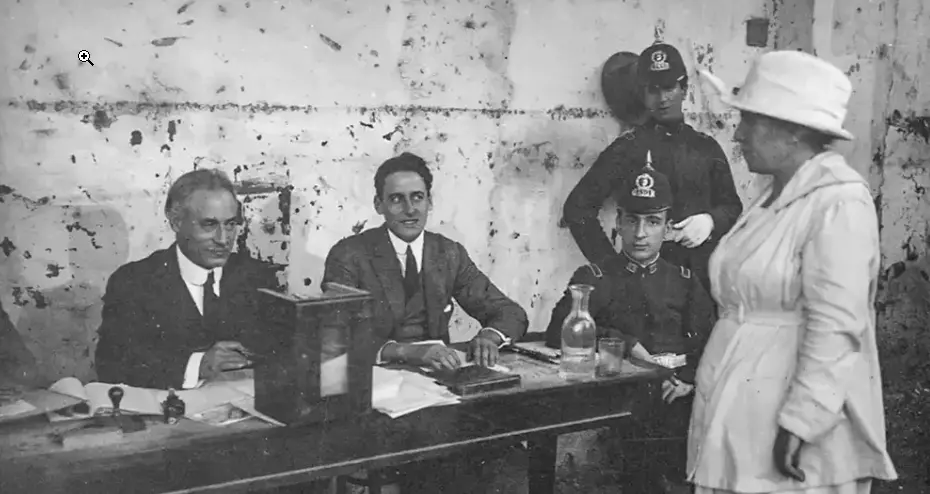
Julieta Lanteri, an Italian immigrant in Argentina, gave the first female vote in South America in 1911
Immigrant background
Julieta Lanteri was born in Cuneo, Italy, on March 22, 1873, to Antonio Lanteri and Matea Guido. At the age of 6, she emigrated to Buenos Aires, Argentina, with her parents and her sister Regina.
Her family had money and, after a while in the South American country, they moved to the city of La Plata, according to an article in the Louis Round Wilson Special Collections Library in the United States. Lanteri became the first woman to attend the National School of La Plata, at the time an exclusive institution for men.
At the National School, she graduated in Pharmacology in 1898. After completing her bachelor’s degree, she went to the National University of Buenos Aires to study medicine. She graduated in 1906, as the sixth woman to obtain a medical degree in Argentina, with the thesis Contribución al estudio del deciduoma maligno (“Contribution to the study of malignant deciduoma”, a type of uterine tumor).
For the next 13 years, Lanteri traveled regularly to Europe to work in hospitals and learn more about medical care in hospitals, nursing homes and schools. When she returned to Argentina, she worked to implement health reforms and improve care for women, children and single mothers.
Social reformer and suffragette
As well as being a doctor, Lanteri was a suffragette and fought for women’s rights. In 1905, she was involved in establishing the Argentine Freethought Association and, four years later, founded the National League of Freethinking Women and The New Woman.
In 1910, she helped organize the first International Congress of Women and later organized the first National Congress of Child Welfare. After being turned down for the position of university professor of medicine, she applied for Argentine citizenship, which was denied on the grounds that she was an immigrant.
In 1910, Julieta Lanteri married Alberto Renshaw, 13 years her junior, from whom she separated some time later, according to the Argentine Ministry of Culture. During her marriage, she finally obtained Argentine citizenship, after presenting a document with her husband’s consent.
A year later, the doctor applied to vote with a court order because the electoral roll made no mention of women not being able to vote. So, on July 16, 1911, she became the first woman to be included on an Argentine electoral roll. In the November 26 elections of that year, she became the first South American woman to vote.
After this achievement, the Electoral Law changed to require military service – only men could enlist. But the suffragette didn’t give up. She founded the National Feminist Party in 1918, which advocated equal suffrage, gender equality, better working conditions, child support, maternal benefits and more.
Lanteri ran for National Deputy from 1919 to 1932. In 1929, she tried to join the army by arguing before the Supreme Court that, as military service was compulsory for all citizens (the law did not specify only those of the male sex), women should be able to sign up to be in the military and thus also be able to vote.
The feminist, however, was denied this request. She continued to fight for women’s rights by trying to become a National Deputy, but on February 23, 1932, she was hit by a car and died two days later at the age of 59.
Victim of an attack?
The car reversed onto the sidewalk on the corner of Diagonal Norte and Suipacha in Buenos Aires. The driver was David Klappenbach, a member of the Civic Legion (the government’s single party). It is still debated whether this was an accident or a political assassination. More than a thousand people attended Juliet’s funeral.
The right to vote for women was only won in Argentina in 1947. In one of her most famous sayings, Lanteri showed how important the idea of equality between men and women was to her, who didn’t see violence as a solution. “I don’t accept masters and I don’t want to be a patron. We are all equal. I don’t want property and I don’t want to kill to keep it. The whole earth is our homeland,” she said while she was still alive.