
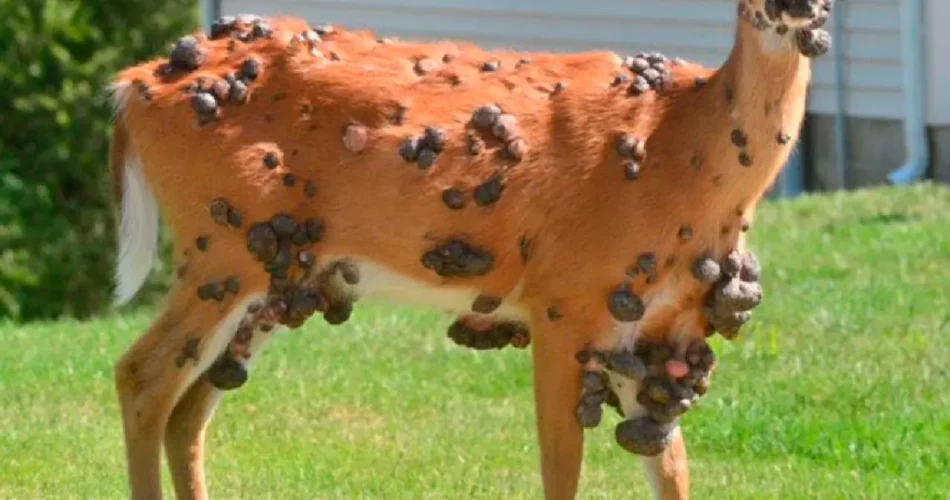
Have you seen those scary photos of deer with big bumps all over their skin? They are going around on social media like Facebook and X. People in the US are worried about these lumps on deer in places like New York, Pennsylvania, and Wisconsin. But don’t panic – scientists have explained what they are, and it’s not as bad as it looks.
These bumps are called cutaneous fibromas, or deer warts. They come from a virus that only hits deer. It’s a kind of papillomavirus, and it makes harmless tumors on the skin. Good news: this virus can’t jump to people, pets, or farm animals. Experts from places like the Maine Department of Fisheries and Wildlife and the Pennsylvania Game Commission say it’s safe.
How Do These Lumps Look and Spread?
The lumps can be small like a pea or big like a football. They often look gray, black, or like raw meat, and they don’t have hair on them. You might see them on the head, body, or legs of the deer.
Bugs like mosquitoes and ticks spread the virus when they bite deer, mostly in warm weather. Deer can also pass it to each other if they touch in spots where they eat or rest. Male deer rub their antlers on trees during mating time, which can leave the virus behind for others to pick up.
Most deer get better on their own. Their body fights the virus, and the lumps fall off after a few months. Only in rare cases do big lumps cause problems, like making it hard for the deer to see, walk, or eat if they get infected with bacteria.
No Big Rise in Cases This Year
Officials in Pennsylvania and Wisconsin say there hasn’t been a jump in these cases in 2025. This happens every year, especially during hunting and mating seasons. It’s not new – scientists have known about it since the 1950s.
But warmer weather from climate change might help bugs spread more, so the virus could show up in new areas.
Is It Safe for People?
Yes, it’s safe. You can’t catch this from deer. If you hunt or touch them, just follow normal rules for handling and cooking the meat. The lumps are only on the skin, not in the muscles, so the meat is okay to eat.
This isn’t just deer – rabbits and squirrels have had similar issues lately, but again, no risk to humans.
Social media can make things seem worse than they are. Always check facts from trusted sources before you worry. If you spot a deer like this, report it to local wildlife experts to help track it.
Stay informed about wildlife health – it’s key to keeping our animals and nature safe!